Let's document the current state and trends of digital product design as of December 31, 2025.
Visual cycle
Aqua -> Skeuomorphism -> Flat -> Liquid Glass
or, in other words:
Complexity -> Simplicity -> Complexity
Visually, the UI design made a circle:
1. 2000 — Aqua
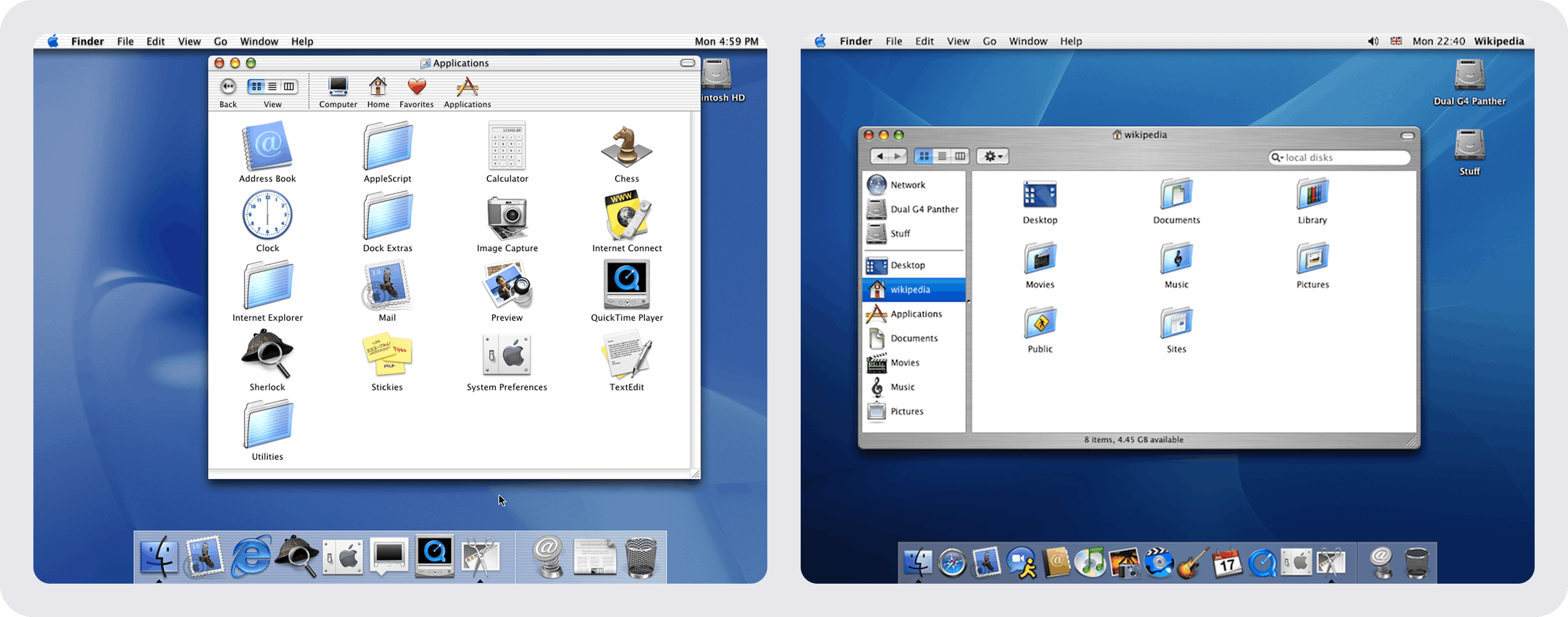
Interfaces emphasized physical metaphors, translucency, gradients, reflections, and depth. UI elements attempted to feel material and alive.
2. 2007 — Skeuomorphism
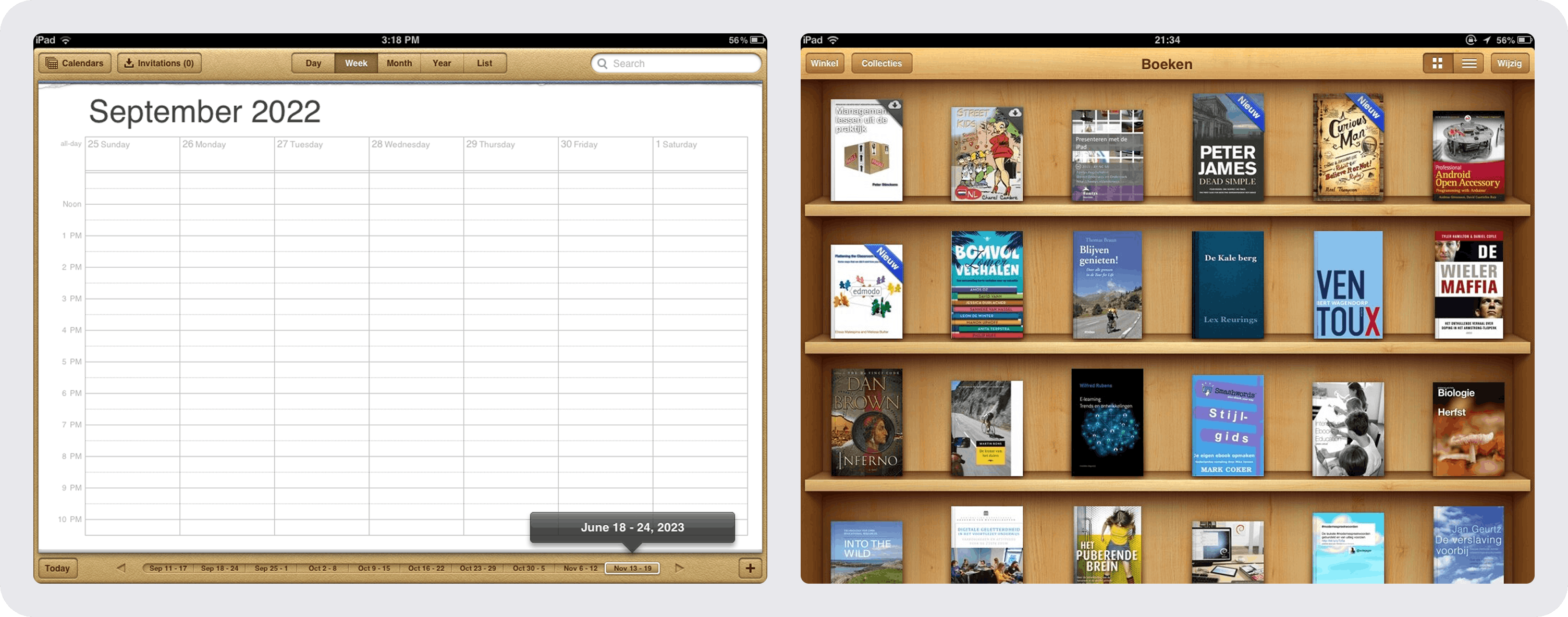
Leather textures, stitched edges, knobs, and buttons directly referenced real-world objects to help users transition into digital environments.
3. 2013 — Flat design
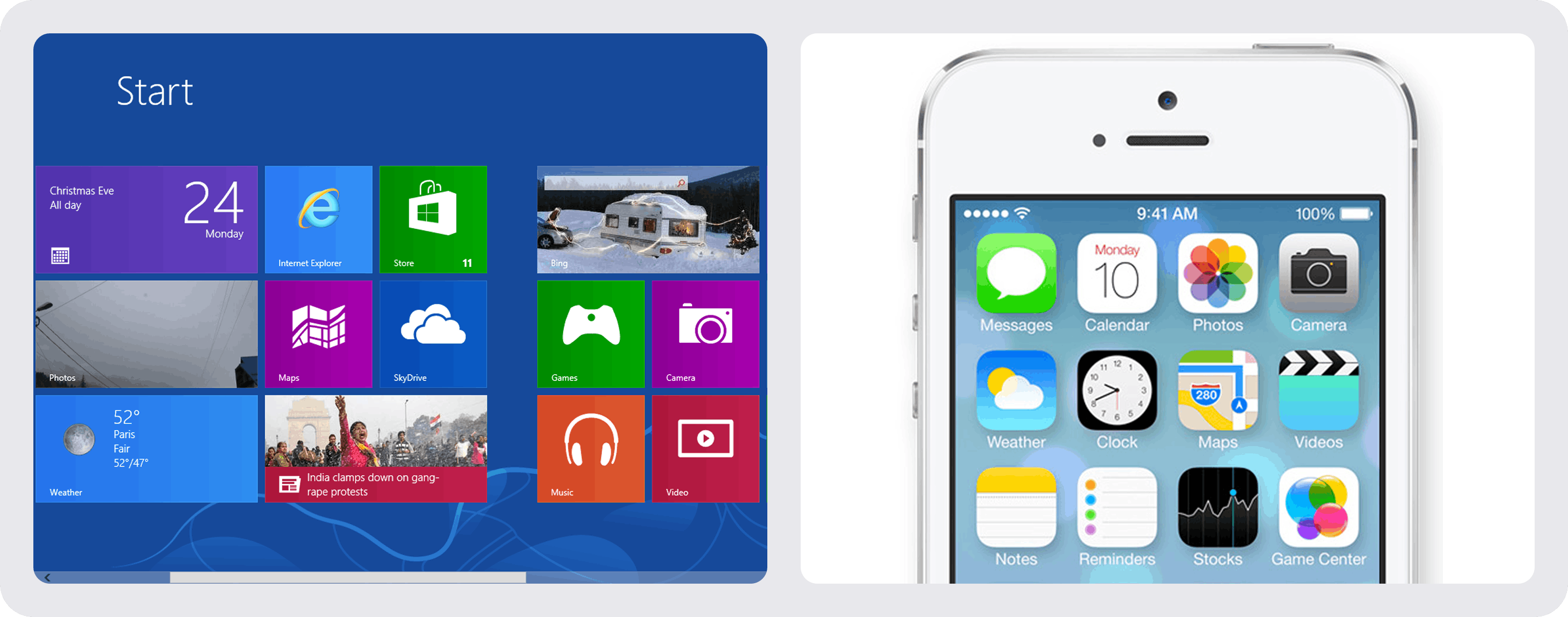
Visuals were stripped to symbols and color blocks.
4. 2025 — Liquid Glass
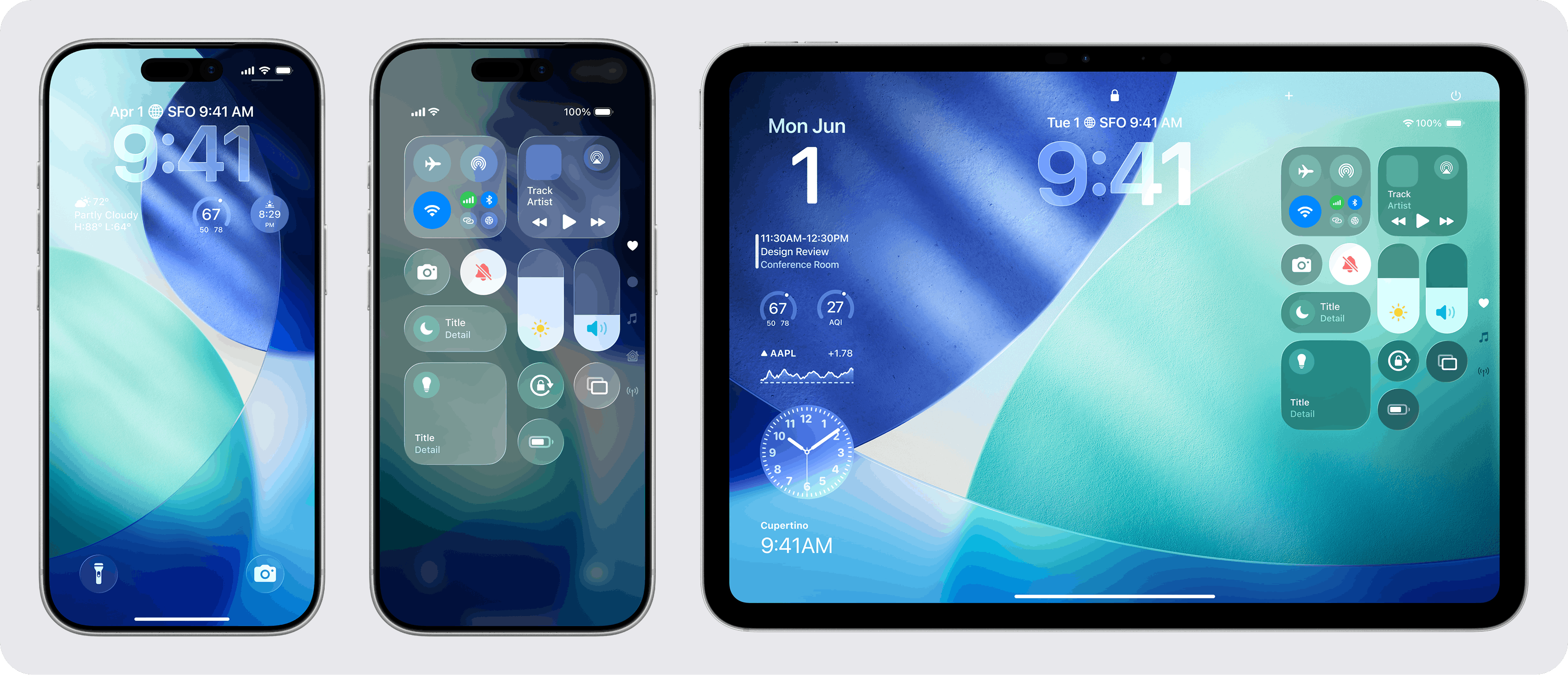
Not a return to skeuomorphism, but a synthesis. Depth, translucency, blur, and reflections return — without literal metaphors. Interfaces feel spatial again, but remain abstract.
Overall, since 2013, when visuals became simpler and “flattened”, a reverse trend of visual complexity began: shadows, textures, and details gradually started to appear once again. Liquid Glass can be seen as a kind of marker for the point when interfaces finally stopped being flat.
Of course, over the years there have been many new or refreshed iterations of various styles: Semi-flat, Neumorphism, Cyberpunk, Dark mode, Glassmorphism, to name a few — and of course, there is no “correct” visual style, only appropriate choices within context.
Let’s take a look at some of the current styles, specifically in web and product UI.
Blueprint aesthetic (background grid lines)
A local visual trend. Background lines reminiscent of blueprints have been frequently used in technical and engineering products in recent years.
Examples:
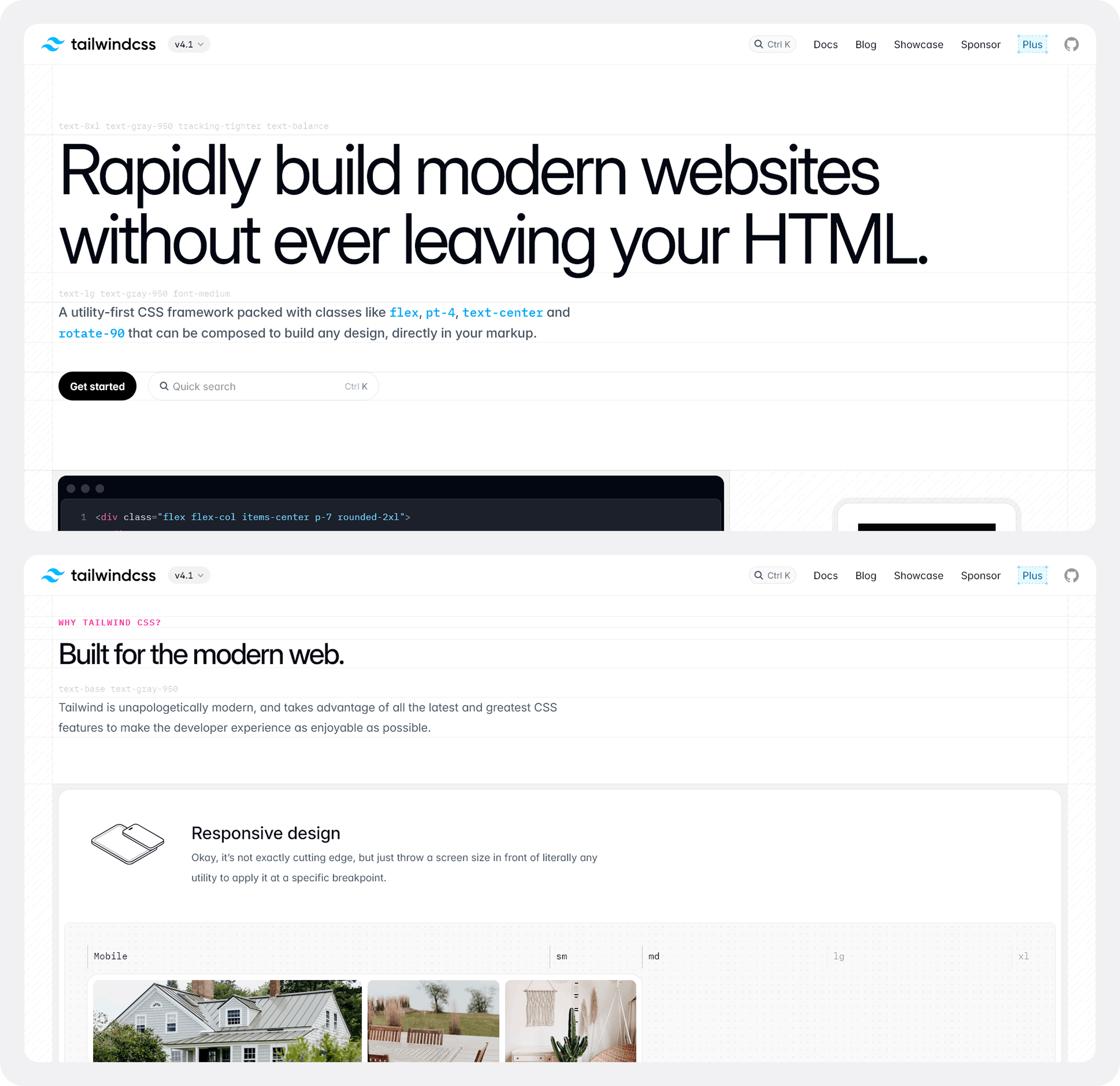
Tailwind
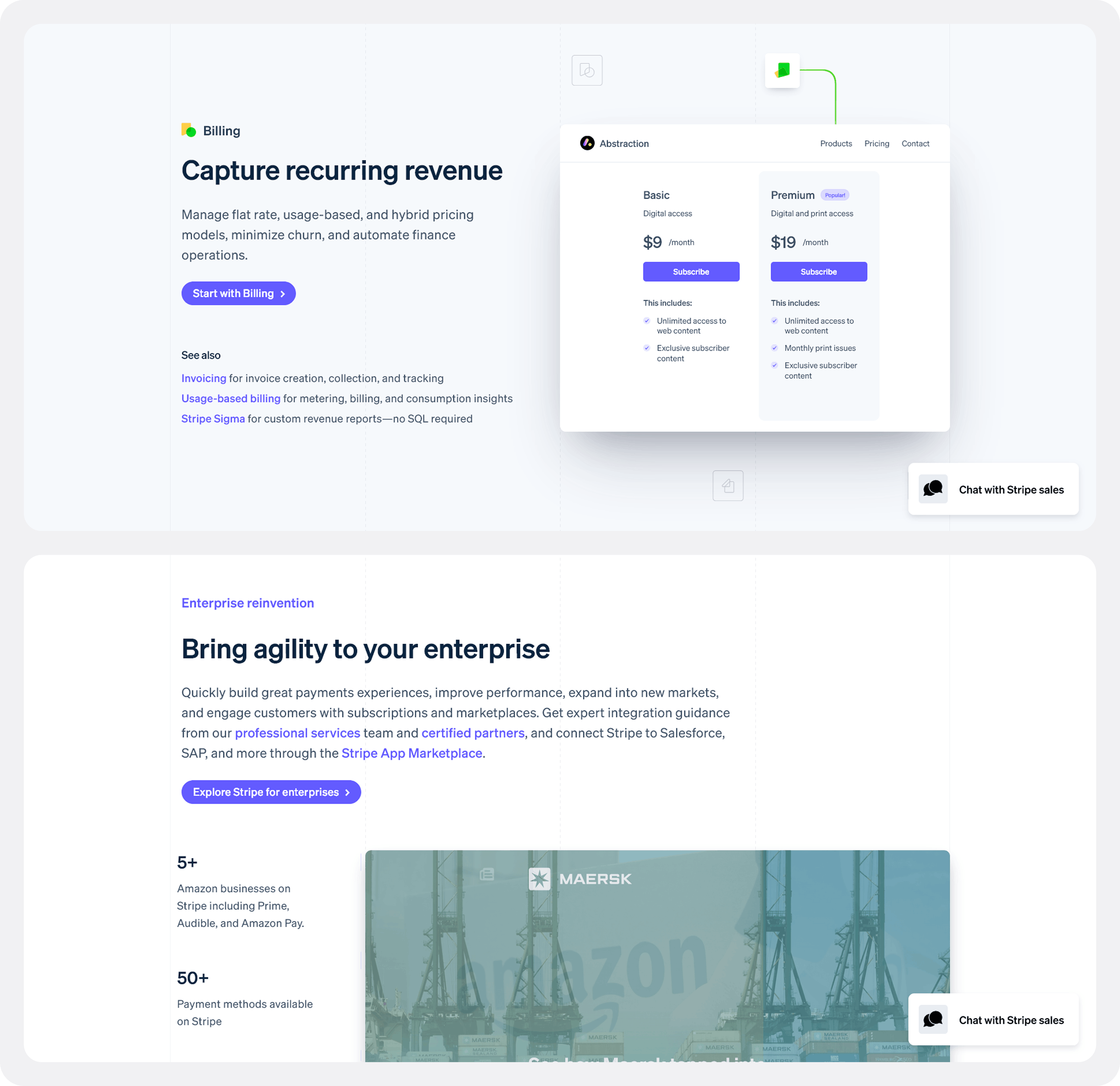
Stripe
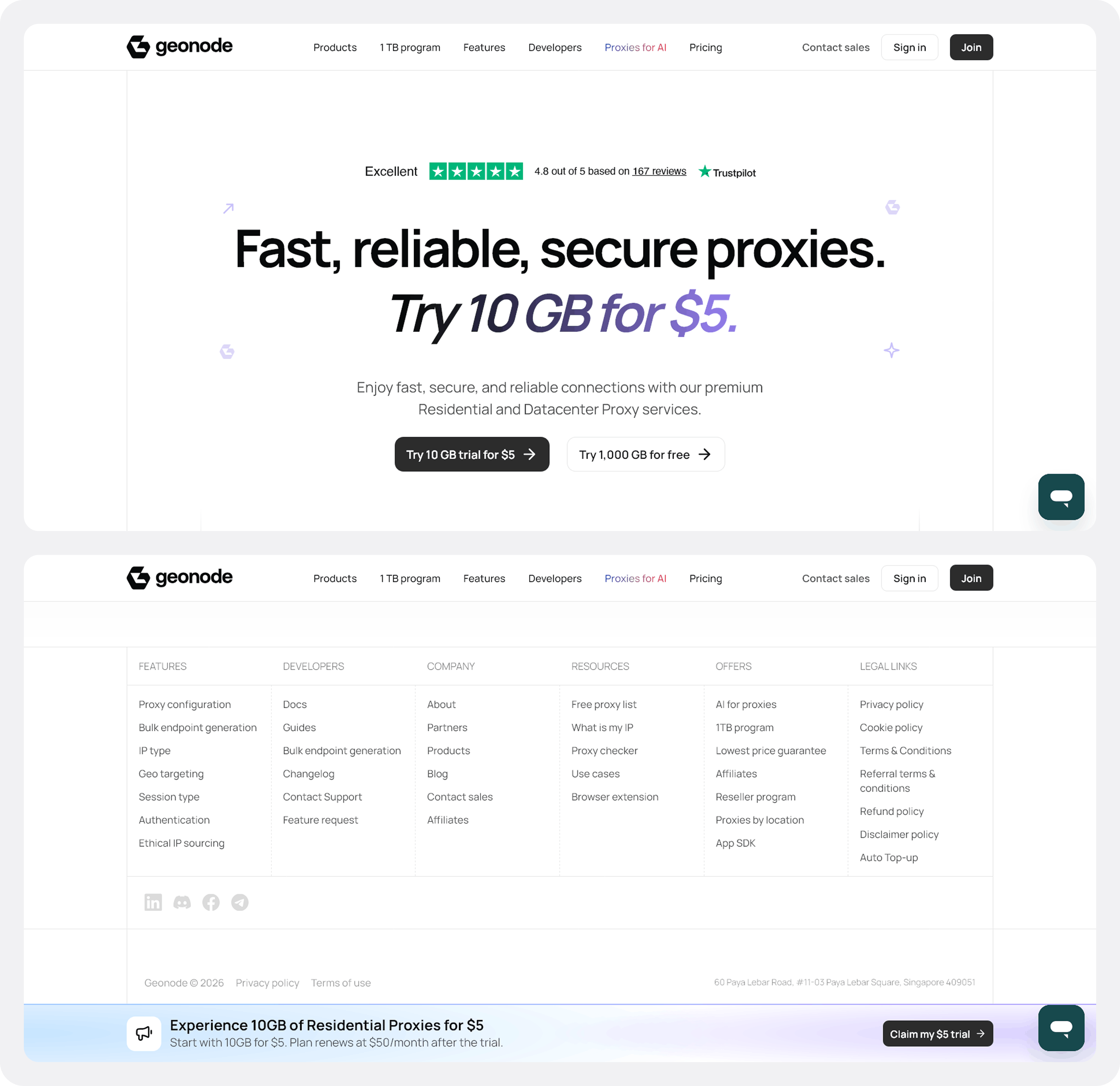
Geonode
It seems this trend is declining though. Cleaner visuals are taking its place: fewer lines, more whitespace, and more shadows.
Examples:
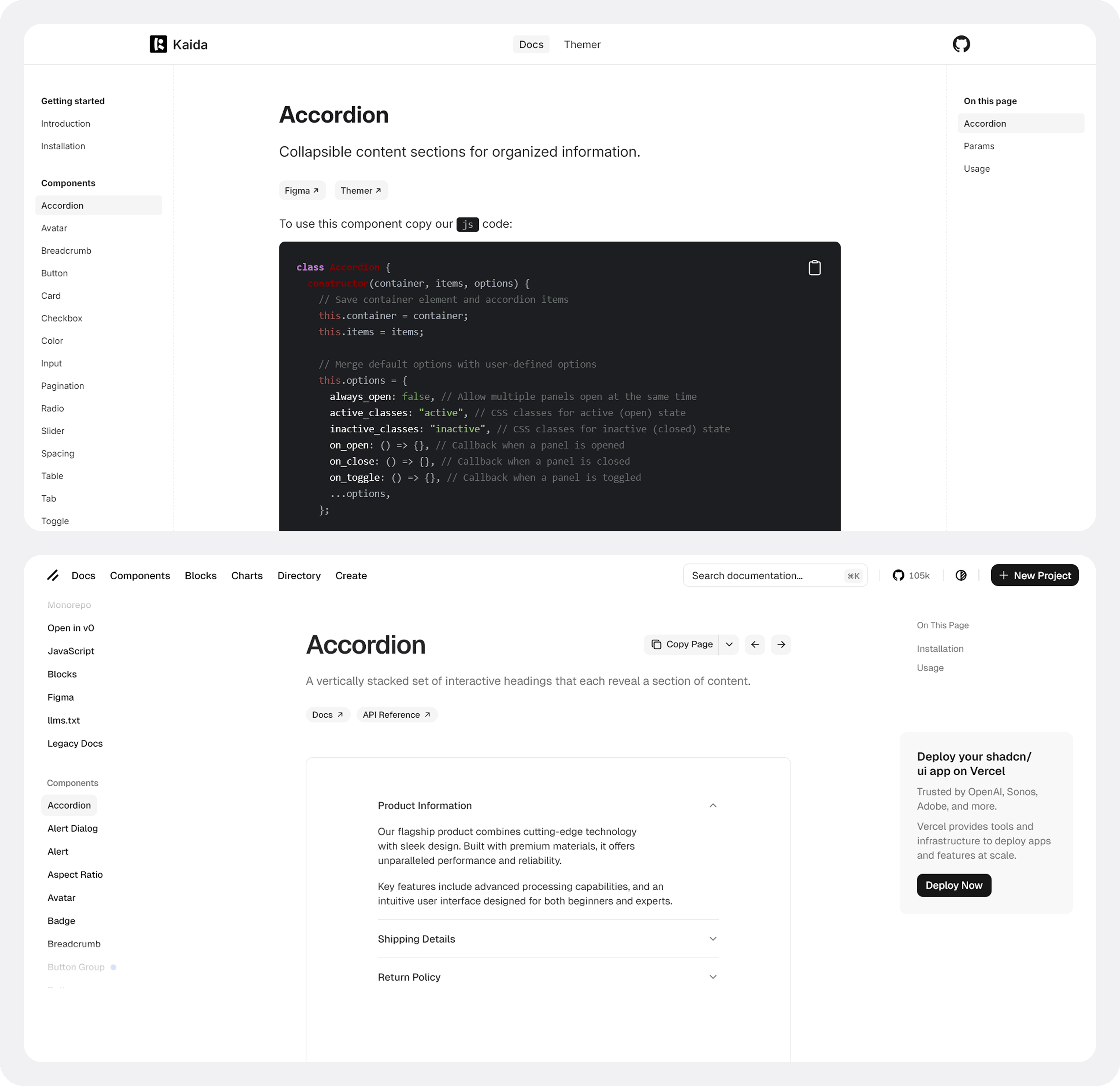
Kaida, shadcn/ui
Island layout
A local visual trend.
Content is grouped into floating sections, clearly separated from one another, often sitting on neutral or blurred backgrounds. These layouts feel modular, spatial, and calm.
It's relevant right now because it evokes a Liquid Glass feel and looks clean.
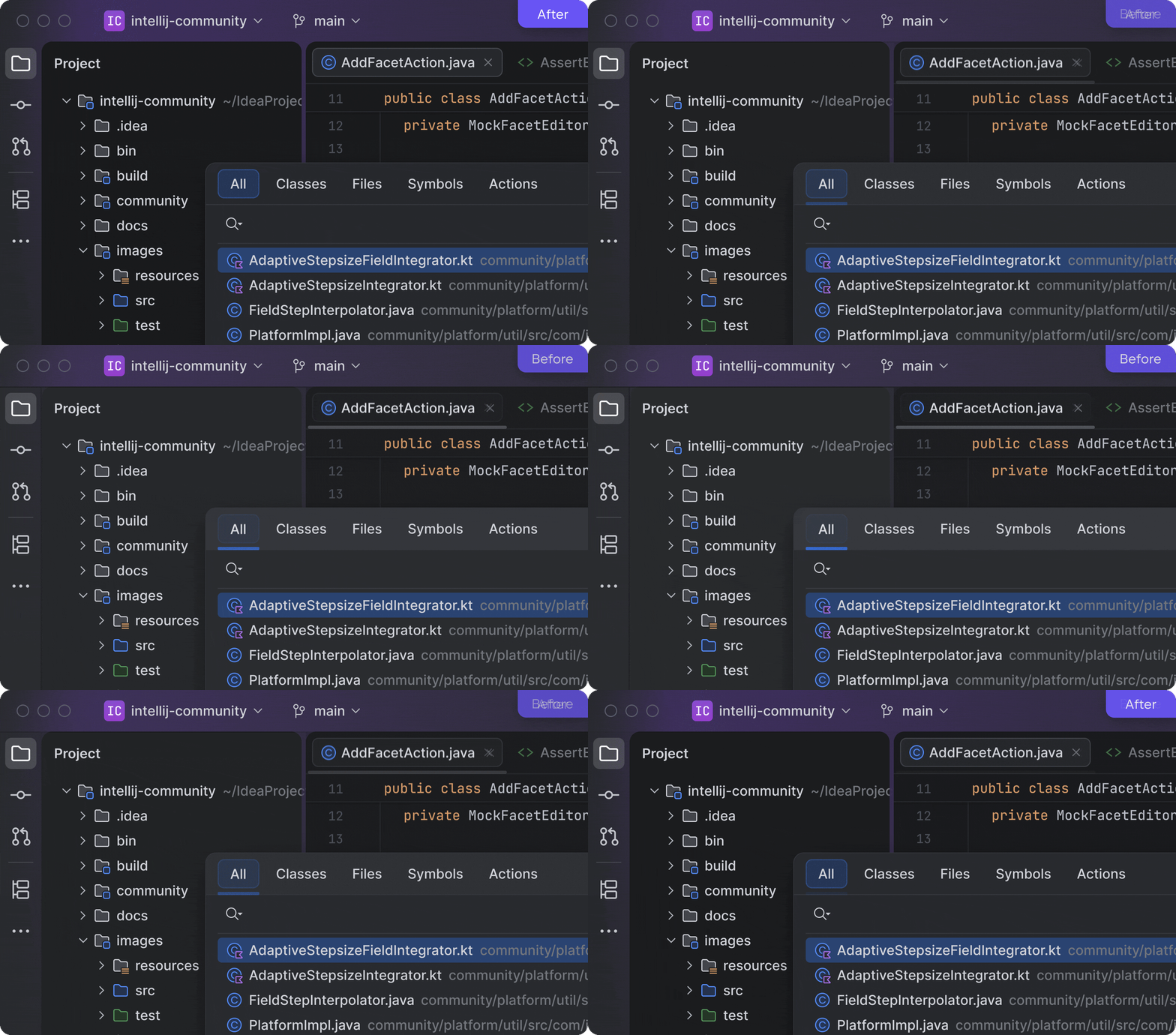
Jet Brains island theme announcement
Animations & micro-interactions
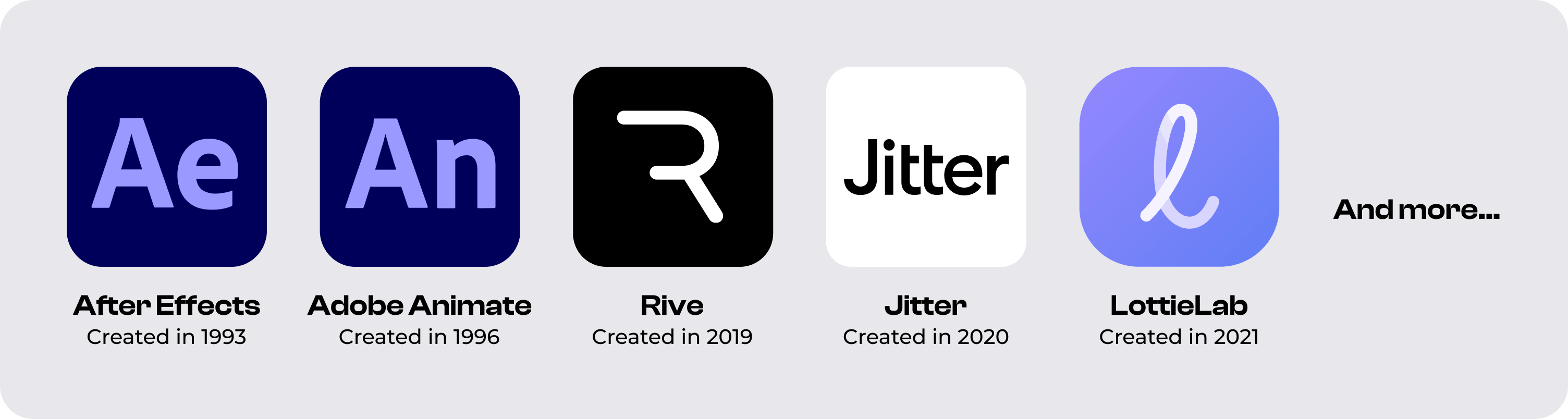
Thanks to the development of new animation tools, creating animations has become easier and more widespread.
Motion explains state changes, reduces perceived latency, replaces static visual cues.
This wouldn't have been possible 10 years ago.
AI tooling
LLM-powered tools are emerging and evolving, simplifying, speeding up, and automating work. To name a few use cases:
- AI image & video generation. Quickly create visuals, design concepts, and marketing materials from text prompts.
- AI prototyping. Generate prototypes of applications. This affects both developers (generated code still needs review and refinement) and designers (possibility to rapidly create AI-assisted drafts for clients, with clients, or with teammates).
- General queries. New wave of tools help to summarize data, answer queries, and extract insights efficiently.
- AI components generation. It’s possible to generate reusable code frontend components in various styles.
- etc.
Blurring the line between designer and engineer
Partly thanks to LLM-powered tools, partly as a natural process, the boundary between designer and engineer continues to blur: designers without technical understanding create friction and dead ends, engineers without design sensitivity ship brittle experiences.
This doesn't eliminate specialization, but it raises the baseline. Designers who understand constraints produce stronger solutions. Engineers who understand interaction and hierarchy make better trade-offs. AI accelerates this convergence by making learning faster and experimentation cheaper.